How to Help Pelvic Pain in Pregnancy Naturally and Safely
Pregnancy related pelvic pain is one of the most common things we treat. Some of the most common types of pregnancy pain we see include round ligament pain, low back pain, SI joint pain, pubic symphysis pain, and pelvic floor related pain.
The reason behind each of these types of pain can be different depending on what someone is experiencing. That said, there is one common underlying factor we consistently see playing a role across nearly every type of pregnancy related pain we treat. That factor is the postural and anatomical changes that occur as your body adapts to a growing baby.
As pregnancy progresses, your body naturally shifts to make room for the uterus and fetus. This often includes increased hip external rotation, which is why your feet may start pointing outward, along with a forward shift of your belly. These changes can alter how your muscles work together. When this happens, the glutes are often unable to fire as effectively as they do without a growing uterus, and the adductors or inner thigh muscles may begin to overcompensate and become overactive.
If you take one thing away from this article, I hope it is this. While pelvic pain in pregnancy is common, it does not have to be your normal. Help and relief are available.
Pelvic floor physical therapy addresses pregnancy related pain through a combination of manual or hands on treatment, dry needling, prescriptive exercise, and guidance around lifestyle modifications and daily habits that support your changing body.

Types of Pregnancy Related Pain and How It Shows Up
Pelvic pain during pregnancy can show up in several different ways. Understanding where your pain is and when it shows up can help make sense of what is happening in your body.
Pubic symphysis pain
Pubic symphysis pain is felt in the front of the pelvis. This pain is often sharper and shows up most during transitional movements.
It commonly hurts more when you:
Stand on one leg
Go down stairs
Roll over in bed
Go from sitting to standing
This is often the type of pain where activities like putting pants on feel especially uncomfortable.
SI joint pain
SI joint pain typically presents as low back pain at the back of the pelvis. This pain does not radiate down the leg.
It is usually described as dull and achy. It is not typically sharp but is consistently noticeable.
Hip pain
Outer hip pain during pregnancy can come from a few different sources.
If the pain is coming from the true hip joint, it may be related to an old injury that is being challenged by the demands pregnancy places on the body.
Outer hip pain can also originate from the pelvic floor. A pelvic floor muscle called the obturator internus can refer pain to the outside of the hip rather than deep within the pelvis.
Tailbone pain
Tailbone pain can be related to a history of a fall and involve the tailbone itself. However, it can also come from the pelvic floor muscles.
All pelvic floor muscles attach to the tailbone, so tension or compensation in these muscles can present as tailbone pain.
Why these pains happen during pregnancy
Pregnancy involves significant biomechanical and hormonal changes.
Hormonal changes create ligament laxity, which is necessary to allow the body to adapt to a growing baby. This ligament laxity reduces stability and allows biomechanical changes to occur.
Your center of gravity shifts quickly during pregnancy and then shifts again rapidly postpartum.
Musculoskeletal changes often include:
A forward tilt of the pelvis
Increased arching of the low back
Increased hip external rotation
Rib changes to allow the uterus to grow upward
A more flattened diaphragm
Increased pressure and ligament laxity in the feet and ankles
Muscle imbalance and compensation
A common muscle imbalance during pregnancy is glute inactivity with adductor overactivity. This occurs due to the anterior pelvic tilt and overall postural changes.
The glutes do not necessarily lose strength, but coordination changes. As glute coordination decreases, the pelvic floor often compensates by working harder to provide stability. This compensation can contribute to pelvic pain.
The role of daily habits
Pregnancy related pelvic pain is often driven by daily patterns rather than major injuries.
Examples include:
Sitting cross legged
The way you get out of the car
How you roll in bed
Sleep positioning
These repeated habits tend to contribute more to pain than large traumatic events.
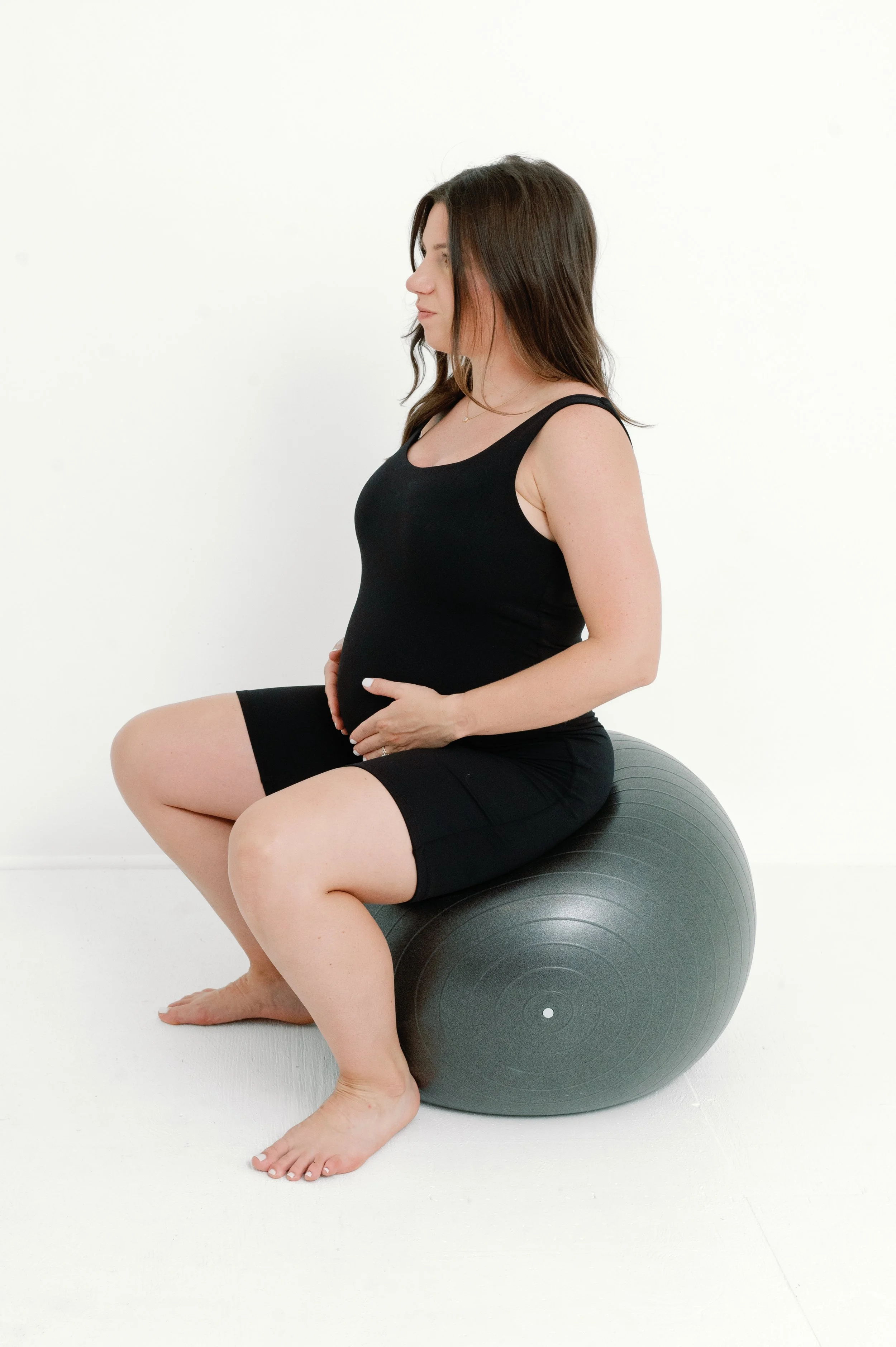
Daily Strategies to Help Musculoskeletal Pain During Pregnancy
Small daily changes can make a big difference when it comes to managing pregnancy related pain.
Move like a mermaid
Move as if you are wearing a mermaid skirt. Keep your knees and ankles as close together as possible during daily movements. This can reduce strain on the pelvis and is helpful even if you are not currently in pain.
Avoid single leg movements
Single leg movements often aggravate pelvic pain.
Common examples include:
Putting pants on while standing
Stepping into clothing one leg at a time
Reaching down to pick things up without thinking
Sit down to put your clothes on and try to keep movements symmetrical throughout the day.
Getting in and out of bed or the car
Transitions are often when pain is most noticeable.
When getting into bed:
Back up and sit down
Lay down on your side
Roll onto your back
When getting in and out of the car:
Back up to the seat
Sit down first
Move both legs together
Sleep positioning support
Instead of only placing a pillow between your knees, also place a pillow between your ankles. Supporting both helps keep the pelvis in a more neutral alignment and prevents pulling on the pelvis overnight.
Modify exercises that cause pain
If an exercise causes pain, it is best to avoid or modify it. No pain no gain does not apply during pregnancy. Modify exercises as much as needed and listen to what your body is telling you.
Support belts should be prescriptive
Support belts such as belly bands or pelvic belts should be used prescriptively. A belly band will not help pelvic pain, and a pelvic belt will not help abdominal pressure. Wearing the wrong support for the wrong reason can be unhelpful.
Stretching versus stability work
Stretching can sometimes help, but during pregnancy, stability is often lacking due to ligament laxity. Many patients experience more relief from stability and strengthening work than from stretching alone.
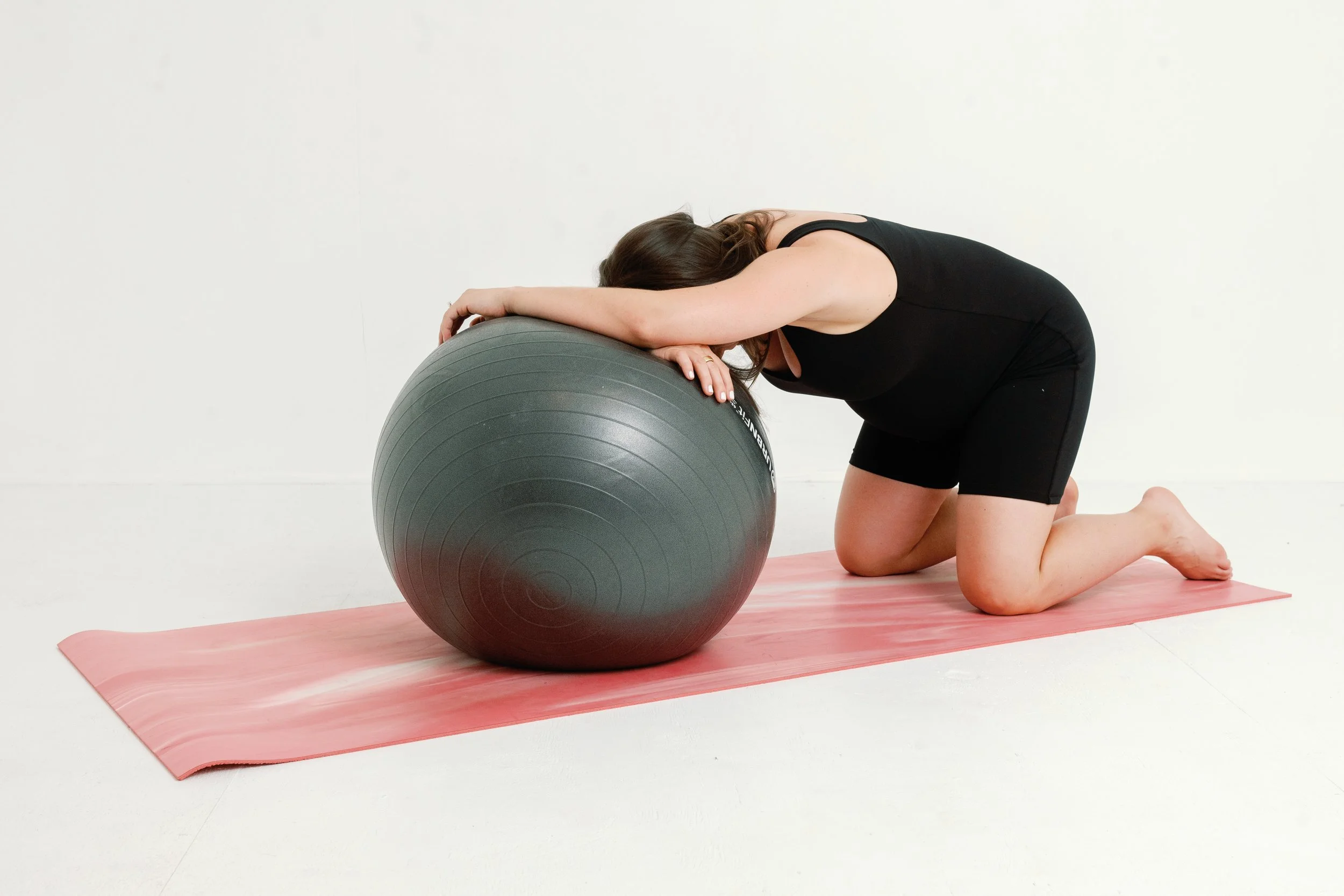
Pelvic Floor Physical Therapy and Long Term Relief
The goal of pelvic floor physical therapy during pregnancy is to determine exactly where the pain is coming from and why it is occurring.
Is the pain coming from the pubic symphysis, the SI joint, the round ligaments, or the pelvic floor? Once the source is identified, treatment can be tailored to address the pain and prevent it from returning.
Treatment looks different depending on the type of pain involved.
If the pelvic floor is contributing to pain, pelvic floor physical therapy may include an internal exam. There are also many external treatment options that can be used to help improve symptoms.
Exercises should be prescriptive in nature, just like medication. You should know what you are doing, why you are doing it, how often to do it, and how many repetitions are appropriate. Proper dosing matters.
Pain is a red flag. It indicates dysfunction that can potentially interfere with labor. Addressing pain during pregnancy allows you to work through these issues before labor and delivery.
Patients who participate in pelvic floor physical therapy during pregnancy often experience easier recoveries. If you are experiencing pelvic pain, now is the best time to seek care.
We would love to help..
Pelvic pain during pregnancy is common, but it is treatable. You do not have to push through pain or assume it is something you must live with.
Listening to your body, modifying daily habits, and addressing pain early can make a meaningful difference during pregnancy and beyond.
The good news is that we are currently accepting pregnant patients in person in Rockwall, Canton, and Sulphur Springs.
If this is something you are experiencing, we would truly love to help support you through it.
You can reach out to us here and we will follow up with a phone call to get you scheduled, or you can call the office at 903-962-2600.