
Pediatric Pelvic Health

At Texas Pelvic Health, we love treating kiddos and helping families navigate bladder and bowel concerns.
A few of the most common things we see and treat include:
Bedwetting
Urinary leakage
Constipation
Encopresis, or bowel accidents
While these symptoms can be difficult to navigate and can put a strain on the entire family, we love helping families find a path forward.
Many of the parents who come to see us have been told that their child will simply “grow out of it.”
While some bladder and bowel concerns can improve as children get older, there are absolutely things we can do now to address what may be contributing to their symptoms and help make life easier for both your child and your family.
We look at the whole picture rather than focusing only on the accident, bedwetting, or constipation itself. Understanding what may be contributing to your child’s symptoms helps us create a treatment plan that is realistic for your child and your family.
Finding the “why” behind bladder and bowel symptoms in children can be tricky, especially because so much of the conversation depends on a child’s age and ability to communicate what they are feeling. Often, there isn’t just one factor contributing to these symptoms. We may find connections between a child’s toileting behaviors, daily habits and lifestyle, sensory-seeking or sensory-avoidant tendencies, constipation, and sometimes, surprisingly, pain.
That’s why we look beyond the bladder and bowels. Milestone development, core and glute strength, balance, and overall stability can all give us important information about how your child’s body is functioning and what may be contributing to their symptoms.
What Does Pediatric Pelvic Floor Physical Therapy Look Like?
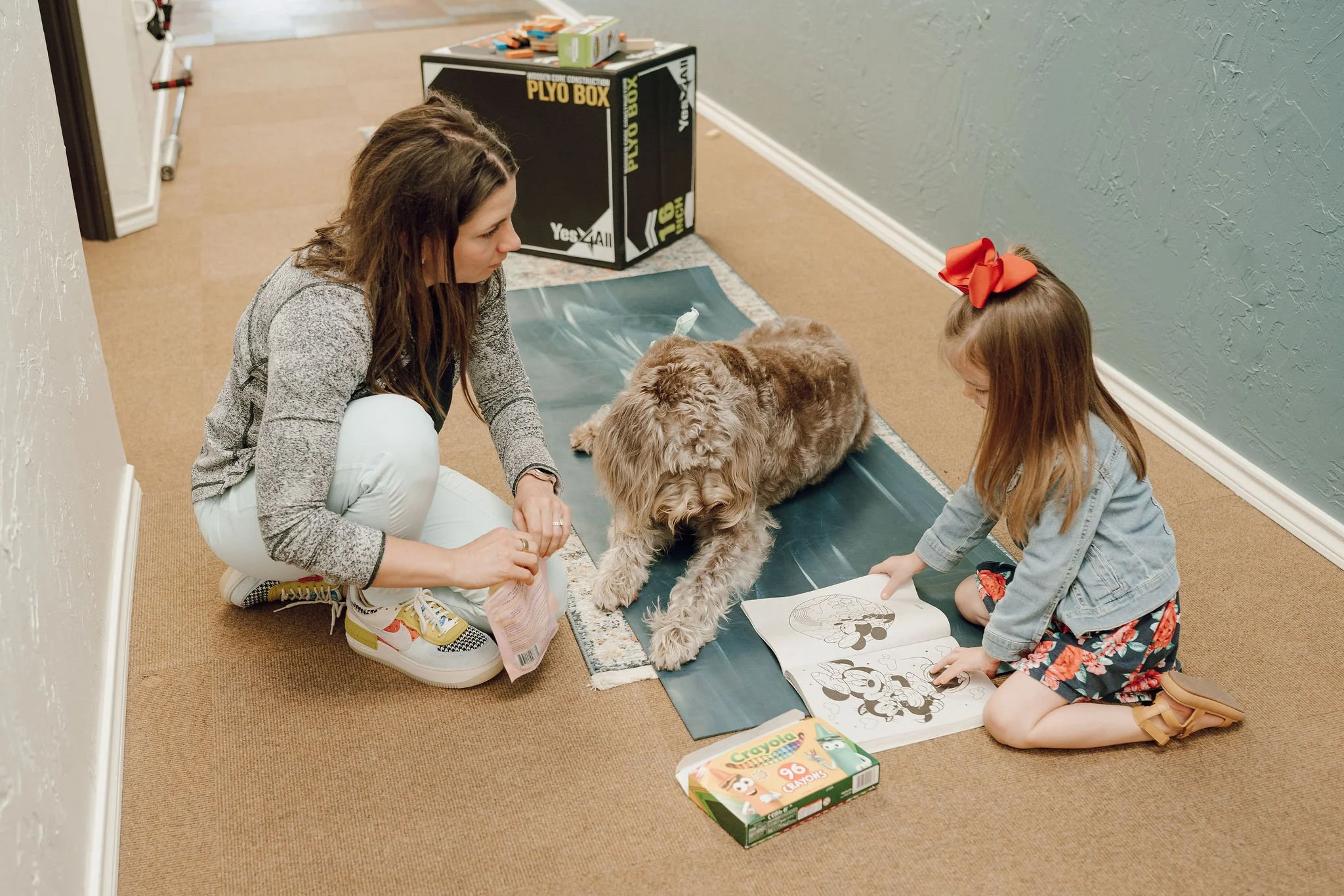
The first appointment is all about getting to know your child and your family.
We want to hear what you’ve noticed, what you’ve already tried, what has helped, and what hasn’t. Just as importantly, we want to get to know your child. We want to understand their personality, help them feel comfortable in our clinic, and establish trust.
Here’s the full lowdown:
-
Your First Appointment
One of our biggest goals during the first appointment is to establish a solid home program that sets your family up for success with bowel and bladder habits.
For many children, this starts with optimizing their bowel routine and making sure the right lifestyle strategies are in place. We’ll help you understand what we want you to work on at home, why we’re recommending it, and how to realistically incorporate it into your family’s routine.
-
Follow-Up Appointments
Follow-up visits build on that foundation and are individualized to what your child needs. Treatment may include:
Exercise to address strength, coordination, balance, and stability
Core and glute strengthening
Bowel and bladder retraining
Hands-on treatment around the abdomen or legs
Hands-on treatment involving other areas of the body, including the head and neck, when appropriate
Strategies to support nervous system regulation
Progression of your child’s home program
Every appointment looks a little different because every child is different.
-
The Home Program Matters
One of the most important parts of pediatric pelvic floor physical therapy happens outside of the clinic.
A lot of the success of treatment relies on families consistently implementing the strategies we discuss and practice during appointments. Our goal isn’t to give you an overwhelming list of things to do. We want to give your family practical strategies, progress them as your child improves, and help you build routines that work in real life.
Pediatric pelvic floor therapy is a team effort between your child, your family, and your physical therapist.
Pelvic Floor Symptoms and Diagnoses We Treat
Every child’s bladder and bowel symptoms can look a little different. Some families come to us knowing exactly what diagnosis their child has, while others simply know that something isn’t working quite right.
-
Bedwetting
Pee accidents during the day
Poop accidents or skid marks in underwear
Constipation
Difficulty having a bowel movement
Straining to poop
Pain with bowel movements
Holding poop or avoiding the bathroom
Needing to pee very frequently
Sudden or strong urges to pee
Difficulty making it to the bathroom in time
Difficulty fully emptying the bladder
Abdominal or belly pain
Pain with urination
Difficulty recognizing when they need to use the bathroom
-
Nocturnal enuresis
Daytime urinary incontinence
Urinary urgency
Urinary frequency
Dysfunctional voiding
Incomplete bladder emptying
Constipation
Functional constipation
Encopresis
Fecal incontinence
Stool withholding
Dyssynergic defecation
Overactive bladder
Recurrent urinary tract infections
Bladder and bowel dysfunction
Your Questions, Answered
-
No. We absolutely do not perform internal pelvic floor exams on children. We can guarantee that this will not happen at our office.
Pediatric pelvic floor physical therapy looks very different from pelvic floor therapy for adults. Our evaluation and treatment are completed through information gathering, age-appropriate exercise and movement, and, when appropriate, hands-on treatment to areas such as the abdomen or legs.
Our priority is making sure your child feels safe and comfortable throughout the process.
-
We treat pediatric patients of many different ages. Our youngest patients have been around three years old, and we see many kindergarten and elementary-aged children for bladder and bowel concerns.
There isn’t one “right” age to start. If your child is experiencing bladder or bowel symptoms that are affecting them or your family, we can help you determine whether pediatric pelvic floor physical therapy may be appropriate.
-
No. Your child does not have to be fully potty trained or able to verbally communicate with us to benefit from treatment.
We work with children with many different communication abilities, including children who are nonverbal. Parents and caregivers are an especially important part of the process. We rely on what you know about your child, along with their body language, behaviors, and responses during treatment, to help guide our evaluation and treatment plan.
-
The short answer is: it depends.
Several factors can affect how long treatment may take, including what your child is experiencing, how long the symptoms have been present, how consistently the home program can be implemented, and whether there are sensory, behavioral, or other factors that may influence treatment.
After getting to know your child, seeing how they respond to treatment, and beginning their home program, your physical therapist should be able to give you a much better idea of what your child’s treatment plan may look like.
For most families, we can provide a clearer picture of the expected plan of care within the first one to three visits.
-
Yes, absolutely. Constipation can contribute to urinary symptoms in both children and adults.
In fact, when we see a child with concerns like bedwetting, urinary leakage, urgency, or frequency, one of the first places we often look is the bowels.
The bladder and bowels sit close together and share many of the same muscles and nerves. When constipation is present, it can affect how the bladder stores and empties urine and may contribute to urinary symptoms.
This is why improving bowel function is often an important part of our treatment plan, even when a child’s primary concern seems to be their bladder.
-
Yes. Your child can still be constipated even if they have a bowel movement every single day.
Having a daily bowel movement doesn’t necessarily mean your child is completely emptying their bowels. Because of this, there will often be a bowel optimization component of your child’s first appointment, even if they are already pooping regularly.
The bowels sit directly behind the bladder, so when a child comes to us with a bladder concern, we want to make sure their bowel function is in tip-top shape too.
-
Your child’s first appointment is all about getting to know your child and your family.
We’ll talk about what you’ve noticed, how long the symptoms have been happening, what you’ve already tried, and what has or hasn’t helped.
We also want to get to know your child. Building trust is incredibly important to us, so we’ll pay attention to their personality, communication style, body language, and comfort level throughout the appointment.
Depending on your child’s needs, we may discuss bowel and bladder habits, toileting behaviors, lifestyle factors, sensory tendencies, milestone development, pain, core and glute strength, balance, and stability.
One of our biggest goals during the first visit is to give your family a solid home program. For many children, this starts with optimizing bowel habits and implementing lifestyle strategies that support healthy bladder and bowel function.
And remember, we do not perform internal pelvic floor exams on children.
-
No. Your child does not need a referral before their first appointment.
Texas is a direct access state for physical therapy, which means your child can begin physical therapy without first obtaining a referral or other documentation from their healthcare provider.
If your child continues physical therapy, we will need a signed plan of care from a healthcare provider within the required timeframe. Our office helps coordinate this process. At your first appointment, we’ll ask you to provide a healthcare provider for your child’s chart, and our team will take care of sending the necessary documentation for signature.
You do not need to wait on a referral before reaching out to us or scheduling your child’s first appointment.
-
Yes! We work with children with sensory differences and developmental needs quite frequently.
Every child communicates, learns, moves, and responds to their environment differently. We take those differences into consideration throughout the evaluation and treatment process and adapt our approach based on what works best for your child.
Parents and caregivers are also an important part of this process. You know your child best, and we use your feedback along with your child’s responses, behaviors, and body language to help guide treatment.
-
We invite you to give pediatric pelvic floor physical therapy a try.
Many of the families who come into our office have already tried several different approaches to address their child’s bladder or bowel symptoms. However, the pelvic floor and the way it works together with the bladder, bowels, core, and the rest of the body often have not been fully addressed.
Pelvic floor physical therapy gives us an opportunity to look at your child’s symptoms from a different perspective. We’ll consider the treatments you’ve already tried, what has or hasn’t worked, and what other factors may be contributing to your child’s symptoms so we can determine what may be missing from the picture.


