Peeing While Coughing: How to Solve It
Hey there. I’m so glad you’re here!
I’m going to assume that if you made your way to this blog, you’re probably peeing while coughing. And I want you to know right away that this is extremely common, in fact 15-35% of women experience this & it is actually one of the most common things we see in our clinic.
Peeing with coughing is called stress urinary incontinence.
Sometimes women who leak when they cough will also notice leakage when they sneeze, jump, or laugh, but not always.
If you take one thing away from this blog, let it be this:
It is absolutely treatable with a conservative approach.

Why It Happens
First, let’s clarify a myth. A lot of people think leakage only happens after childbirth, and that is definitely not always the case.
I see high school aged girls who are involved in athletics (or other physically involved activities) who also experience leakage with laughing, jumping, coughing, or sneezing. So this is not always a pregnancy or postpartum related situation.
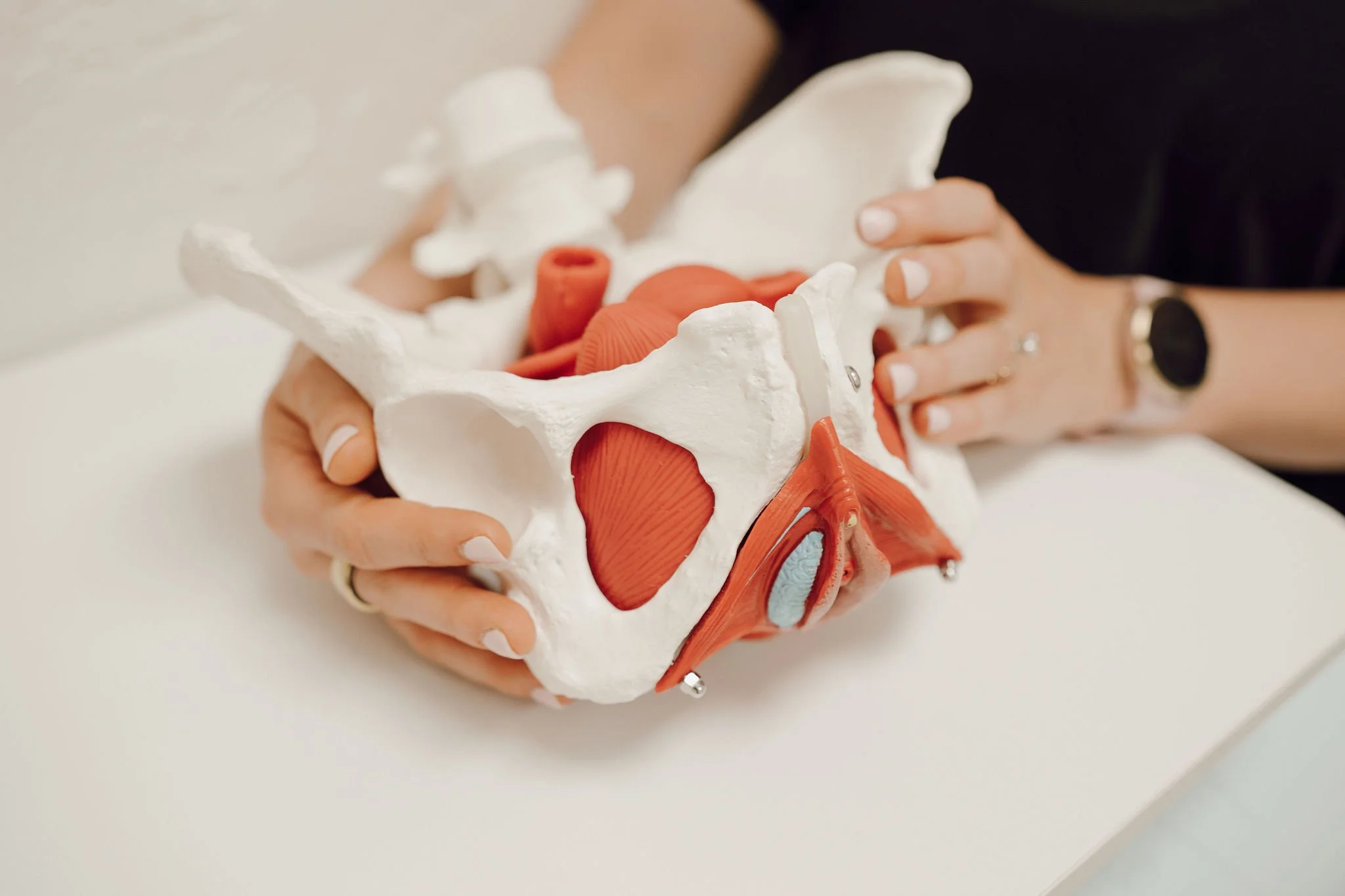
With any of these activities, laughing, jumping, coughing, or sneezing, the pressure in your abdomen increases. If the pelvic floor and core are not strong enough or coordinated enough, the contents are going to come out of the weakest link, which is typically the pelvic floor. That can present as either prolapse (descent of the pelvic organs into the vaginal canal) or urinary leakage.
During these activities, your pelvic floor, diaphragm, and abdominal muscles should all be working together, firing in sync with each other to maintain intra-abdominal pressure. When they are not firing together, that is when you will experience leakage.
Typically, these symptoms, whether leakage or prolapse, are coordination and pressure problems, not necessarily strength problems.
How to Fix It
In order to fix something, you first have to know what is not working. That is the tricky part of my job. I have to figure out what is actually going on with the pelvic floor and where the fault lies.
Typically, peeing when coughing is a pressure problem, which means the right muscles are not contracting at the appropriate time. Sometimes it is simply a coordination issue and other times the muscles are too tight and cannot contract well when they need to.
If your muscles are living in a tight state, it becomes much harder for them to contract when they are supposed to. In those cases, you have to work on relaxing the muscles before you can move into coordination or strengthening.
The most common things I see when it comes to tension are tight pelvic floors due to an upregulated nervous system, tight pelvic floors due to glute instability, and tight pelvic floors due to adductor or abdominal tension.
Another common issue I see is lack of coordination between the diaphragm and the pelvic floor. Often patients are breathing in and contracting their pelvic floor at the same time, which increases intra-abdominal pressure. You actually want to breathe out and contract your pelvic floor and core at that time (this will feel backwards at first).
If you are trying to trouble shoot this on your own at home, here are a few things you can focus on:
Calming your nervous system so you are not clenching your pelvic floor when you are stressed
Adductor mobility
Stretching your abdomen
Strengthening your glutes, specifically in single leg positions
Working on your breathing mechanics as they relate to your pelvic floor, relaxing your pelvic floor when you inhale and contracting your pelvic floor when you exhale

When to Get Help
If peeing while coughing is something you have been experiencing chronically, it warrants an evaluation.
If you are postpartum and have a new onset of urinary leakage, and it does not change or improve by six weeks, it likely will not get better on its own. You deserve an evaluation.
If you are ready to start treatment, we are accepting new patients at our offices in Canton, Rockwall, and Sulphur Springs as well as virtually. We see all of our patients one on one for a full hour, and we can help you find the why behind the leakage and eliminate it altogether.
If you would like to schedule a new patient appointment, you can reach out here, and someone from our office will contact you to set up your appointment.