Postpartum Physical Therapy
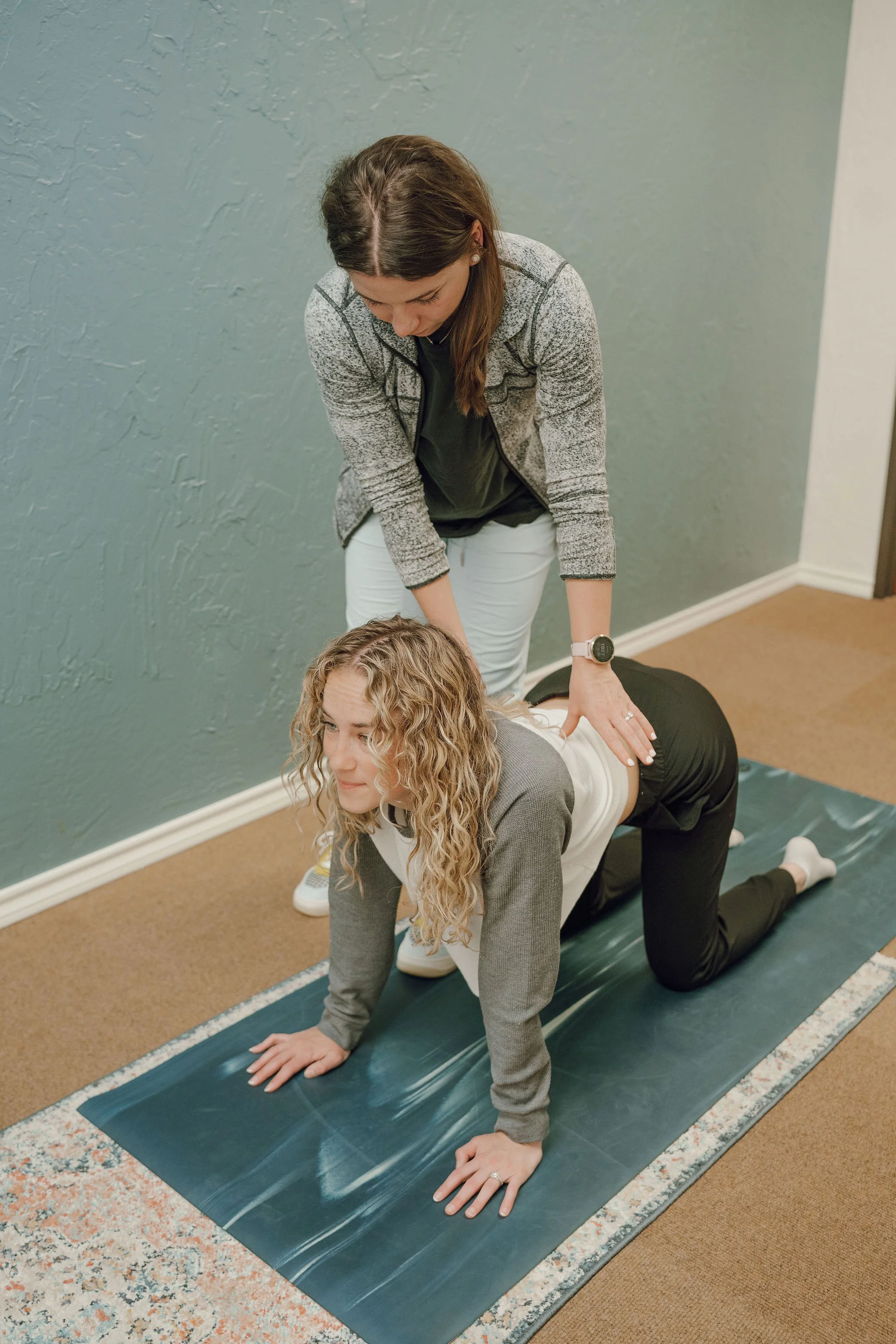
If you're not subscribing to bounce back culture, you've found your people. At Texas Pelvic Health, we believe bouncing back is out, and intentional, structured postpartum rehabilitation is in.
Cheers to no longer accepting the phrase, “it’s normal after you’ve had a baby,” as the end of the conversation. You deserve better than being told to simply live with leaking, pain, pressure, painful intercourse, or core weakness after delivery.
Whether you delivered vaginally or via C-section, your body has gone through a massive physical transformation and deserves support, rehabilitation, and individualized care. Our goal is not to help you “bounce back.” Our goal is to help you heal well, feel strong again, confidently return to the activities you love, and better understand your body throughout the postpartum recovery process.
Postpartum women are some of our favorite patients to treat. We absolutely love getting to walk alongside you during such a fun, exciting, and life-changing season while also supporting you through the very real physical and emotional challenges that can come with postpartum recovery. Our goal is to help you feel supported, empowered, stronger, and more confident in your body as you navigate life after having a baby.
Rest assured, pelvic health symptoms are common after giving birth, but that does not mean they are normal or something you simply have to live with forever.
At Texas Pelvic Health, we would love nothing more than to help guide you back to doing the things you love confidently and symptom free, whether that is jumping on the trampoline with your kids without worrying about leakage, enjoying pain free intimacy with your partner, returning to exercise, or working toward your fitness goals without pelvic floor symptoms holding you back.
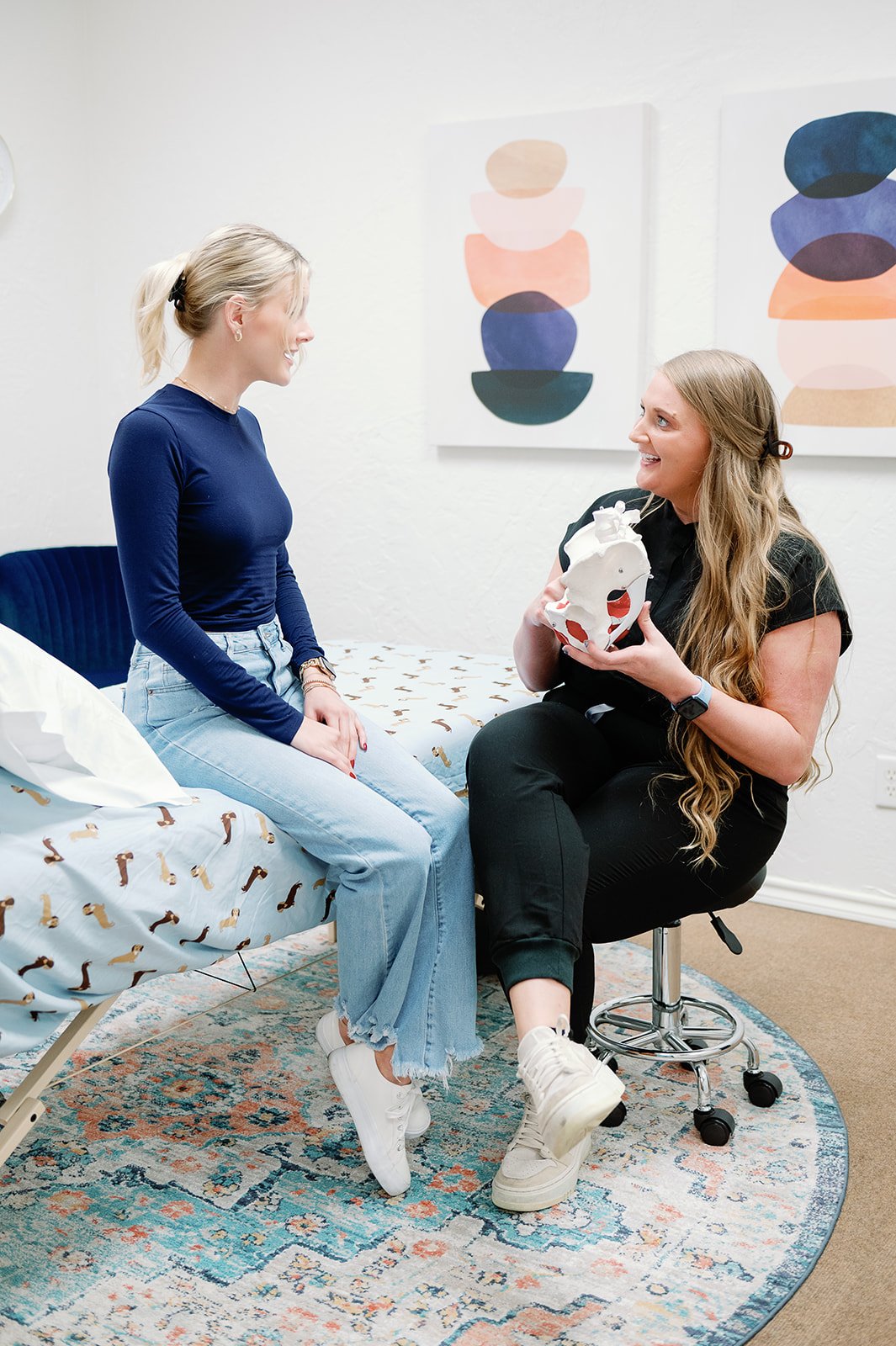
Postpartum Symptoms and Diagnoses We Treat at Texas Pelvic Health
Your body goes through a tremendous amount of change during pregnancy, birth, and the postpartum period. Whether you delivered vaginally or via C-section, postpartum recovery is not something you are simply expected to “figure out” on your own.
At Texas Pelvic Health, we help postpartum patients navigate healing, recovery, strength, and returning to daily life with individualized, one-on-one care focused on helping you feel strong, confident, and supported in your body again.
Many postpartum symptoms are brushed off as “just part of having a baby,” but leaking, pain, pressure, heaviness, and core dysfunction deserve proper evaluation and treatment.
-
Urinary leakage after delivery
Pelvic pressure or heaviness
Pain with intercourse
Perineal pain or scar tissue pain
Pelvic pain postpartum
Tailbone pain
Core weakness
Diastasis recti
Constipation postpartum
Difficulty returning to exercise
Pain with tampon use
Low back pain postpartum
Hip pain postpartum
Pain or fear surrounding return to intimacy
Pelvic floor weakness or poor coordination
Feelings of instability during movement or exercise
-
C section scar pain or sensitivity
Scar tissue restrictions or pulling sensations
Core weakness after C section
Abdominal doming or coning
Low back pain after C section
Difficulty returning to workouts or lifting
Pain with movement, coughing, or getting out of bed
Urinary leakage postpartum
Pelvic floor dysfunction after C section
Hip pain or pelvic pain postpartum
Numbness or altered sensation around the incision
Pressure management difficulties
Difficulty reconnecting with core muscles postpartum
-
Diastasis recti abdominis
Stress urinary incontinence
Urge urinary incontinence
Pelvic organ prolapse
Dyspareunia
Coccydynia
Pelvic floor dysfunction
Levator ani dysfunction
Cesarean scar adhesions
Pelvic girdle pain
Sacroiliac joint dysfunction
Hypertonic pelvic floor dysfunction
Pelvic floor weakness
Abdominal wall dysfunction
Postpartum low back pain
Myofascial pain syndrome
Pudendal nerve irritation
Symphysis pubis dysfunction (SPD)
“Cannot recommend Dr. Bailey Jones enough! She has been helping me with my pregnancy journey, and I will continue to see her post pregnancy as well. My round ligament pain has decreased in my third trimester, and my chiropractor has noticed a difference in my body as well since starting my pelvic floor therapy. I encourage every woman to invest in their body and seek help they may need, and Dr. Bailey should be your first stop!”
Your Questions, Answered
-
Many patients begin pelvic floor physical therapy around six weeks postpartum, but treatment may begin earlier in certain situations depending on your symptoms, delivery, and medical history. Even if you are years postpartum, it is never “too late” to benefit from pelvic floor physical therapy.
-
Urinary leakage is very common postpartum, but common does not always mean normal. Leakage when coughing, sneezing, jumping, running, or exercising is often a sign that your pelvic floor and pressure management system need additional support and rehabilitation.
-
Absolutely. C sections are major abdominal surgeries, and many patients benefit from support with scar mobility, core strength, pressure management, posture, pain, and returning to activity after delivery.
-
Yes, many patients benefit from postpartum rehab even if they had a relatively uncomplicated pregnancy or delivery. Pregnancy and birth place significant stress on the pelvic floor, core, hips, and nervous system, and proactive rehabilitation can help improve recovery and reduce future symptoms.
-
Yes. Pain with intimacy after delivery is common, but it is not something you simply have to accept. Pelvic floor physical therapy can help address scar tissue restrictions, muscle tension, pelvic floor coordination, nervous system sensitivity, and mobility limitations that may contribute to pain.
-
Yes. Pelvic floor physical therapy can help improve core coordination, pressure management, breathing mechanics, and strength to support healing and function related to diastasis recti.
-
This varies significantly from person to person. At Texas Pelvic Health, we help guide patients through a gradual and individualized return to exercise based on symptoms, healing, strength, goals, and pelvic floor function.
-
Not necessarily. Being medically cleared at six weeks postpartum does not always mean your body has fully recovered strength, coordination, endurance, or pelvic floor function. Many patients still benefit from rehabilitation and guided recovery after this point.
-
No. Internal exams and treatments are always optional. Your therapist will discuss all treatment options with you and create a plan of care based on your symptoms, goals, and comfort level.
-
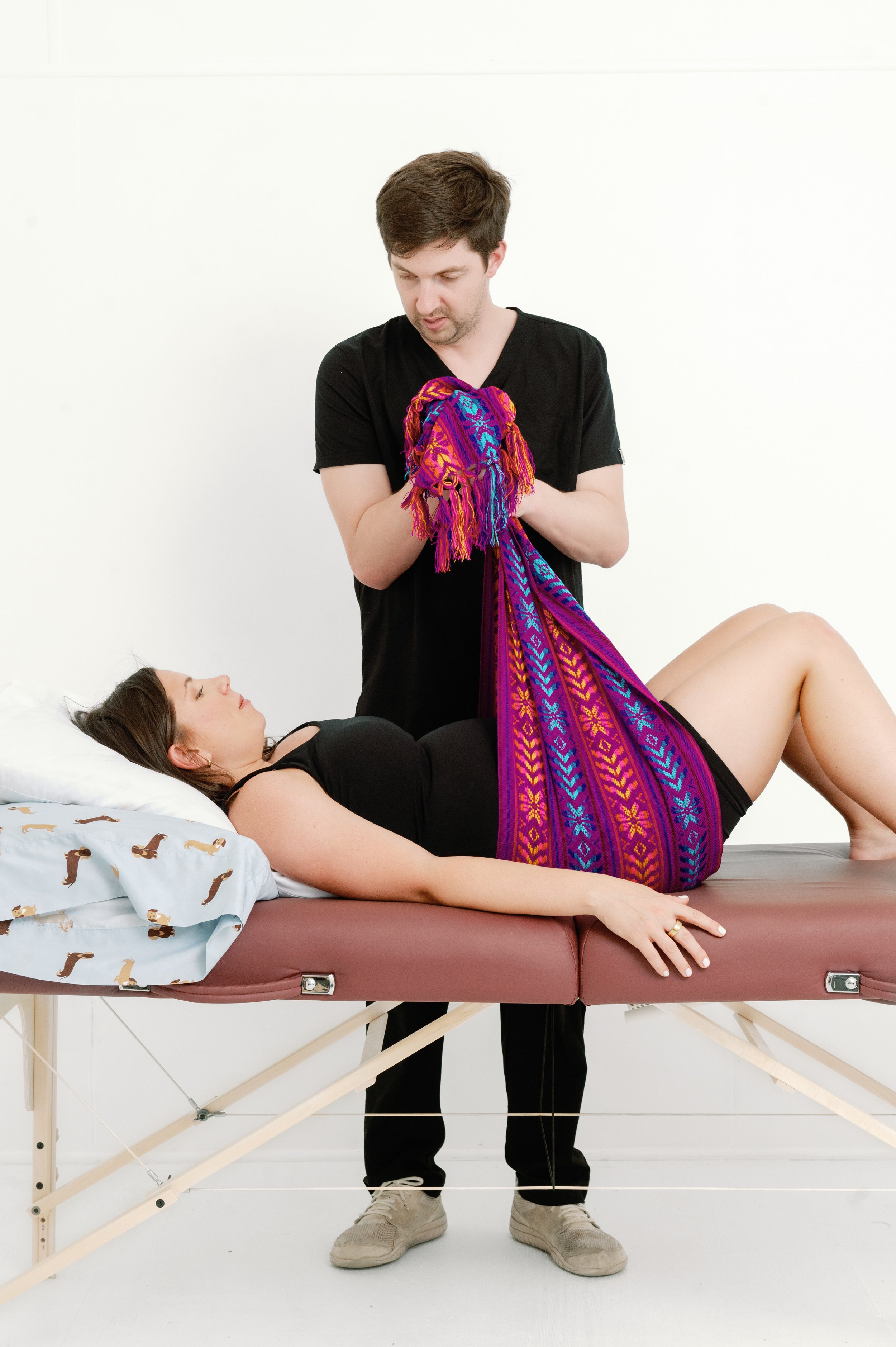
Your first appointment will include a detailed discussion about your pregnancy, delivery, symptoms, goals, lifestyle, workouts, and daily activities. Your therapist may assess posture, breathing mechanics, movement patterns, core coordination, strength, mobility, scar tissue mobility if applicable, and pelvic floor function if appropriate and desired. Every treatment plan is individualized specifically to you and your recovery goals.
Our Three-Step Process
-

Step One
Find the root cause of what is driving your symptoms
-

Step Two
Eliminate your symptoms
-

Step Three
Return to your hobbies and activities without symptoms
At Texas Pelvic Health, we see our patients one-on-one for a full hour each appointment. This allows the time needed to truly discuss the complexity of pelvic health and postpartum-related conditions instead of rushing through your care.
Our practice does not use therapy techs or aides, so you are treated by a physical therapist throughout your session. Our therapists have dedicated their careers to learning about complex pelvic health and postpartum-related conditions and are passionate about helping patients better understand their bodies, feel empowered in their care, and heal through a holistic and individualized approach.