Why Is Prolapse Worse Some Days?
Maybe you've been diagnosed with pelvic organ prolapse and you’re wondering why it’s worse some days, or maybe you haven't been diagnosed yet and you’re wondering why you are experiencing intermittent vaginal pressure.
Either way, you've probably noticed that your symptoms fluctuate throughout the day and from day to day. Some days things may feel manageable, and other days you might feel significantly more pressure and/or heaviness.
So let's talk about why that happens…
Join the Interest List:
Virtual Prolapse Workshop
If you’re not located in the East Texas region, you can join me for my virtual prolapse workshops. Get on the interest list below to be notified of upcoming workshop dates!
What Is Pelvic Organ Prolapse?
Pelvic organ prolapse is the descent of one or more of the pelvic organs into the vaginal canal.
Types of prolapse include:
Cystocele: the bladder moving into the vaginal canal
Uterine prolapse: the uterus descending into the vaginal canal
Rectocele: the rectum descending into the vaginal canal
Enterocele: the small intestine bulging into the vaginal canal
Prolapse is staged from 1 to 4:
Stage 1 is the least amount of movement into the vaginal canal
Stage 4 is the most extreme and is completely prolapsed out of the vaginal canal
Of note, I do see that stage 1-3 prolapses are often the most symptomatic because of the amount of ligamentous strain happening within the pelvis.
What Pelvic Organ Prolapse Feels Like Day to Day
The primary symptom associated with pelvic organ prolapse is pelvic heaviness. A lot of patients describe it as feeling like one of their pelvic organs is about to fall out of their vagina.
Other symptoms can include:
Difficulty urinating
Difficulty defecating
Low back pain
Increased pelvic pressure throughout the day
Feeling like there’s a bubble in the vagina
But… pelvic heaviness is typically the most common symptom patients report.
Why Symptoms Fluctuate
Typically, patients report being more symptomatic in the evenings. This is because of the impact that gravity has on prolapse when you're in an upright position throughout the day.
Another major contributor to fluctuating symptoms is constipation. The rectum sits directly on top of the pelvic floor, and a full rectum is going to place more pressure on the pelvic floor and not allow it to function as efficiently and effectively as it can without constipation present.
Standing, Lifting, and Physical Strain
Another thing that can impact pelvic organ prolapse symptoms is activity level. Patients who have more active jobs/lifestyles are typically more prone to being symptomatic if they are not lifting and moving appropriately with effective body mechanics.
To be clear… this is not to point out that you need to stop doing those things. It's to encourage you to learn proper mechanics and to shed some light on the fact that changing the way you move and lift can ultimately help with & treat your prolapse symptoms.
Activities that commonly increase symptoms include:
Prolonged standing
Heavy lifting
Repetitive bending
High demand exercise
Long physically demanding days
Ways to Reduce Daily Symptoms and Irritation
I'm going to give you several strategies that can help reduce day to day symptoms.
Number One: Manage Constipation
This is a big one.
Some things that can help include:
Adding magnesium citrate
Drinking adequate water, so around 60 to 80 ounces per day
Eating enough fiber, so around 30 ish grams of fiber per day
Getting some form of movement in daily, even something simple like walking
Creating a bowel routine
Your GI system thrives on routine, so creating consistency there can help significantly.
Number Two: Change the Way You Breathe With Movement
Make sure you're not holding your breath whenever you:
Lift something
Stand up from a squat
Stand up from a chair
Move something heavy
Instead, make sure you exhale as you lift or exert effort. When you exhale, you should also be engaging your core.
This is one of the reasons working with a pelvic floor physical therapist can be so beneficial because they can cue you appropriately and make sure you're doing this correctly.
Number Three: Legs Up the Wall
Something as simple as legs up the wall can also help.
You can:
Lie on your back on the floor next to a wall
Elevate your legs up the wall
Place a yoga block under your sacrum
Stay there for three to five minutes
Gravity tends to make prolapse symptoms worse throughout the day, but this is one way you can actually use gravity to your advantage.
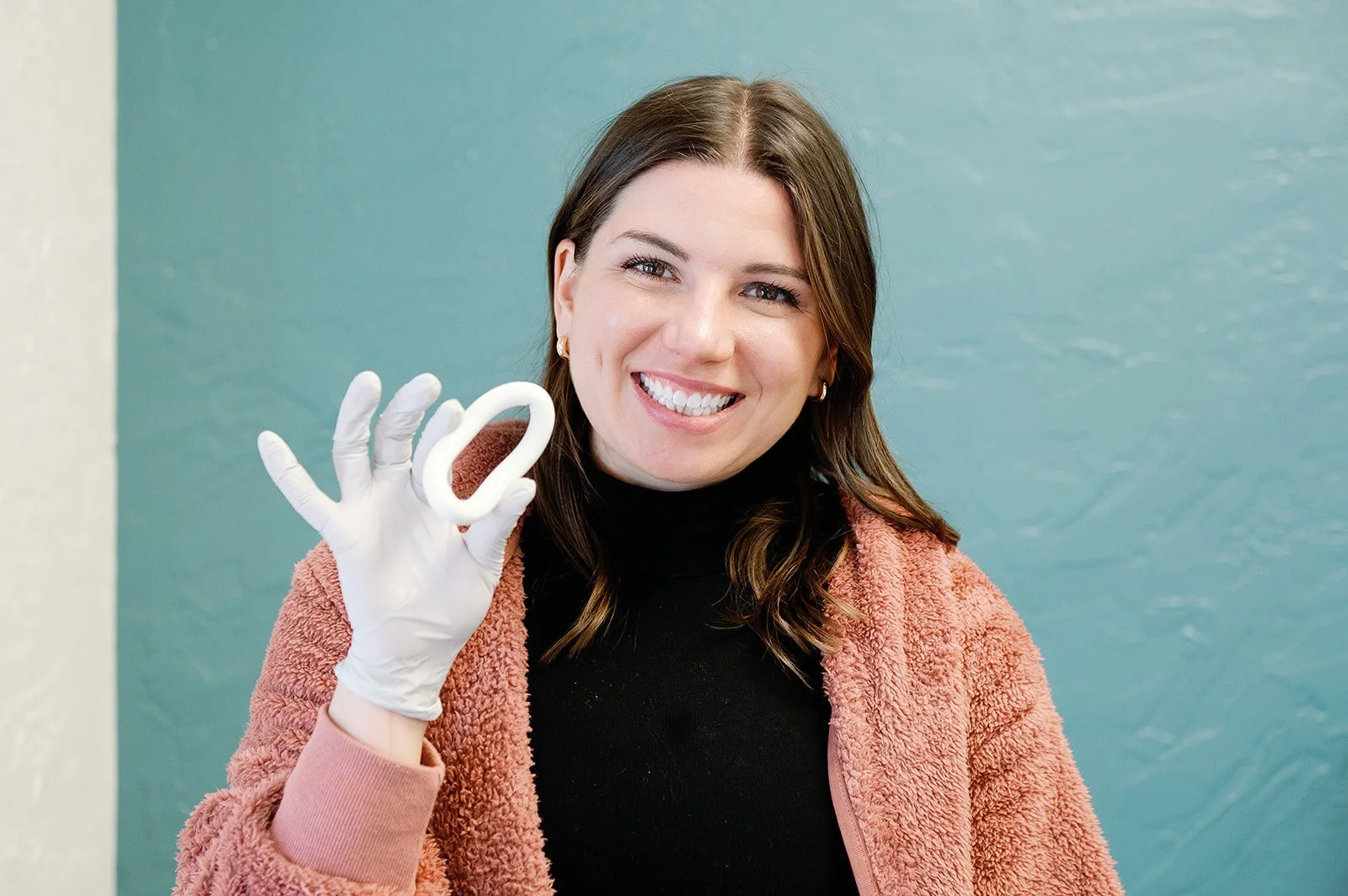
Number Four: Consider a Pessary
A pessary is a vaginal support device that is sized and fitted to you similarly to an orthotic. It can be inserted whenever you're symptomatic.
For example:
Some patients only use it right before their period
Some patients primarily use it during exercise
Some patients use it strategically on higher symptom days
It can really be individualized based on when your symptoms tend to show up the most.
You can read more about pessaries HERE.
When Should Pelvic Organ Prolapse Be Evaluated?
You really do deserve to have this evaluated and treated one-on-one. These tips are helpful and should give you guidance when selecting a provider and knowing whether you're being treated appropriately, but prolapse treatment does require a lot of cueing to make sure you're engaging everything appropriately.
And the good news is, if you're local to Texas, we are accepting new patients in Canton, Rockwall, and Sulphur Springs, and we would love to help you.
We see all of our patients one on one for a full hour and genuinely love treating patients with prolapse because often tweaking just a few things can make a really big impact in your day to day life.
If you're interested in scheduling an appointment, you can:
Fill out a form here and someone from our office will contact you
Call 903 962 2600
We'd love to get you scheduled.