If you've made your way to this blog, I'm going to assume that you or someone you care about is pregnant and wondering if it's safe to exercise during pregnancy and, more specifically, which month to start exercise during pregnancy.
In this blog, I'm going to walk you through everything you need to know about exercising during pregnancy, including when you can start and what to consider along the way.
When Can You Start Exercising During Pregnancy?
First, I think it's important to recognize that exercise is subjective. For some people, exercise means walking a mile or two every day. For others, it means CrossFit. There is a very wide spectrum of what exercise can look like, and that's important to consider when discussing which month to start exercise during pregnancy.
In general, if you were exercising regularly before becoming pregnant, it is safe to continue that exercise throughout pregnancy. However, one thing I want you to pay attention to is your heart rate. During pregnancy, you want to keep your heart rate in a moderate zone while exercising. So, if you're someone who regularly participates in CrossFit, that might mean taking more frequent breaks as your heart rate increases.
But what if you weren't exercising before becoming pregnant?
Well, that's where my answer becomes a big, fat it depends.
It depends on the type of exercise you're wanting to start, how frequently you're planning to exercise, and the intensity of that exercise. Not all exercise is created equal, and those factors matter when determining what is appropriate during pregnancy.
Is It Safe to Exercise in the First Trimester?
Yes! It is safe to exercise during the first trimester of pregnancy. However, I think it's important to acknowledge that exercising during the first trimester can be really difficult, especially when you're dealing with fatigue and nausea.
If you're someone who really values exercise and it's an important part of your daily routine, I would encourage you to consider scaling back the intensity and potentially even the duration of your workouts during the first trimester.
The goal here is to continue maintaining your exercise routine while making adjustments based on how you're feeling. That might mean shorter workouts, less intense exercise, or simply doing what you can on the days you're feeling up to it.
Starting Exercise in the Second Trimester
The second trimester is generally when exercise feels the best during pregnancy! Your energy levels are typically higher than they were during the first trimester, you're likely experiencing less pain and nausea, and your body hasn't experienced quite as many of the physical changes that are still to come as your pregnancy progresses.
If you had a particularly rough first trimester and are wondering which month to start exercise during pregnancy, this is when I would encourage you to begin! The second trimester is often the ideal time to establish an exercise routine because you're likely feeling better physically, have more energy, and your growing belly isn't quite as much of a challenge as it will be later in pregnancy.
Whether you're getting back into an exercise routine that you had before pregnancy or you're wanting to start exercising for the first time, the second trimester is a great opportunity to establish some consistency with movement before entering the third trimester.
Exercising Safely in the Third Trimester
The third trimester is when most of my patients begin to have a harder time physically with exercise. This might be because they're experiencing more pain or simply because their bodies have grown so much that certain exercises become more challenging.
As your pregnancy progresses, there are likely going to be exercises that are no longer feasible, and that's where modifying or scaling your workouts becomes really important.
For example, if you've been doing traditional deadlifts throughout your pregnancy, you might find that your growing belly makes that movement more difficult. Instead of eliminating deadlifts altogether, you could switch to sumo deadlifts to accommodate your growing belly.
The goal isn't necessarily to stop exercising as your pregnancy progresses, but rather to make modifications that allow you to continue moving comfortably.
Benefits of Exercise During Pregnancy
There are SO many benefits to exercising during pregnancy, and they extend far beyond simply maintaining your strength or fitness level. Regular exercise during pregnancy has been associated with improved pregnancy outcomes, fewer complications, and even a smoother postpartum recovery.
Some of the benefits of exercise during pregnancy include:
Higher rates of vaginal delivery and lower rates of cesarean delivery
Reduced risk of gestational diabetes
Reduced risk of gestational blood pressure disorders
Less excessive gestational weight gain
Lower risk of preterm birth
Faster postpartum recovery
Reduced risk of postpartum depression
Less pain during pregnancy
And these are just some of the reasons I encourage my patients to prioritize movement throughout pregnancy!
Contraindications to Exercise During Pregnancy
While exercise during pregnancy has so many benefits, there are certain medical conditions and pregnancy complications that may make exercise unsafe or require additional precautions. This is why it's important to consider your individual medical history and pregnancy before beginning or continuing an exercise routine.
Absolute Contraindications to Exercise During Pregnancy
Absolute contraindications are conditions in which exercise is generally not recommended during pregnancy. These include:
Hemodynamically significant heart disease
Restrictive lung disease
Incompetent cervix
Multiple gestation at risk of preterm labor, such as triplets or higher
Persistent bleeding during the second or third trimester
Placenta previa after 26–28 weeks of pregnancy
Preterm labor or ruptured membranes
Preeclampsia or pregnancy-induced hypertension
Severe anemia
Uncontrolled hypertension
Uncontrolled thyroid disease
Uncontrolled type 1 diabetes
Relative Contraindications to Exercise During Pregnancy
Relative contraindications are conditions that require additional consideration and individualized guidance before beginning or continuing an exercise routine.
These include:
Symptomatic anemia
Unevaluated maternal arrhythmia
Poorly controlled seizure disorders
Poorly controlled hyperthyroidism
Extreme obesity or being extremely underweight
Malnutrition or an eating disorder
History of spontaneous preterm birth or recurrent pregnancy loss
Twin pregnancy after 28 weeks
Heavy smoking
An extremely sedentary lifestyle before pregnancy
If you have any of these conditions, I would recommend discussing your exercise routine with your pregnancy healthcare provider to determine what is appropriate for you.
Pregnancy Exercises to Consider
When it comes to choosing exercises during pregnancy, I like to think about the different areas of the body that we want to strengthen and prepare for the physical demands of pregnancy, labor, and delivery. Rather than focusing on one specific type of exercise, I encourage my patients to incorporate a combination of core strengthening, stability, mobility, and general strength training.
1. Deep Core and Pelvic Floor Exercises
One of the most important areas to focus on during pregnancy is your deep core. This includes your transverse abdominis, pelvic floor, and diaphragm.
I encourage my patients to work on these muscles both individually and together as a system. Learning how to coordinate your deep core muscles can be especially beneficial when it comes time to push during a vaginal delivery.
2. Glute Strength and Stability
Glute strength and stability become increasingly important as pregnancy progresses, especially during the third trimester.
As your baby grows, your center of gravity changes significantly, and your body has to make postural adjustments to accommodate your growing belly. Because of these changes, your glutes may not function quite as efficiently as they did before pregnancy.
This is why I love incorporating exercises that focus on glute strength and stability throughout pregnancy.
3. Hip Mobility and Balance
Another area I encourage my patients to focus on is mobility, particularly through the hips and inner thighs.
I also love incorporating balance exercises into pregnancy workouts. With all of the changes happening to your body and center of gravity, working on balance can be a great addition to your exercise routine.
4. General Strength Training
And finally, don't forget about general strength training! There are so many great exercises that you can continue incorporating throughout pregnancy.
Some of my favorites include:
Squats
Deadlifts
Overhead presses
Core strengthening exercises
The goal is to continue building and maintaining strength throughout pregnancy while making modifications as your body changes.
How Pelvic Floor Physical Therapy Can Help
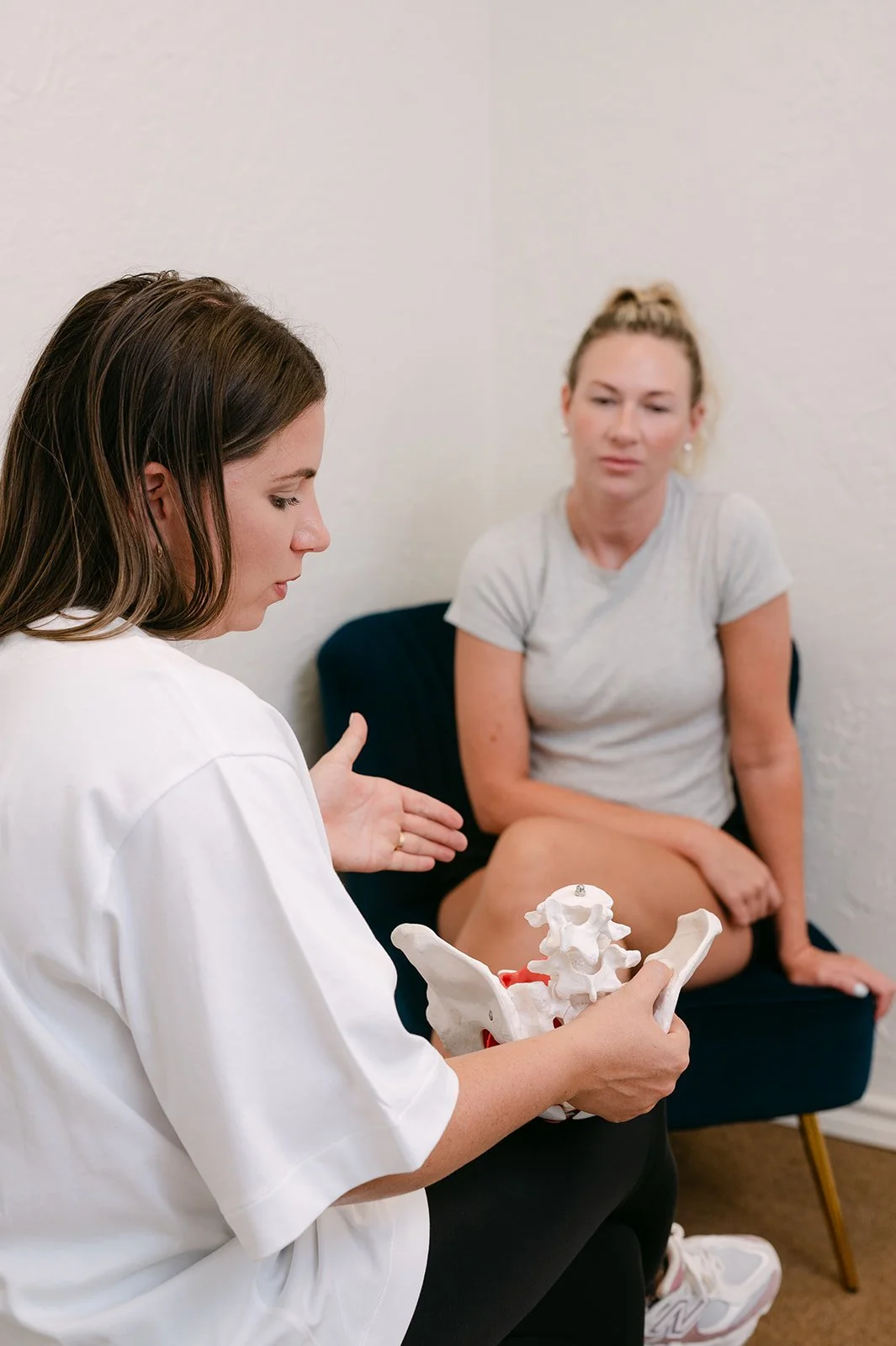
Pelvic floor physical therapy can be incredibly beneficial during pregnancy, especially if you're struggling to maintain or implement an exercise routine because of pain or pelvic floor symptoms.
I often see patients who want to continue exercising during pregnancy but are limited by symptoms such as pelvic organ prolapse, urinary leakage, urinary urgency, or pelvic pain. The good news is that these are all things we can address in pelvic floor physical therapy!
Our goal is to help you manage these symptoms so that you can continue participating in the activities and exercises that are important to you throughout your pregnancy.
We can also help with core strengthening, which is an important part of preparing your body for birth and postpartum recovery. By addressing core strength, pelvic floor function, and any symptoms that may be limiting your activity, we can help you feel more confident continuing your exercise routine throughout pregnancy.
Pelvic Floor Physical Therapy During Pregnancy in East Texas
If you're local to East Texas, good news! We are currently accepting new patients at Texas Pelvic Health in Rockwall, Sulphur Springs, and Canton.
We see all of our patients one-on-one for a full hour, allowing us to provide individualized care based on your symptoms, goals, and stage of pregnancy. Whether you're wanting to continue exercising comfortably, address pelvic floor symptoms, or prepare your body for birth and postpartum recovery, we would love to help you throughout your pregnancy and postpartum journey!
If you're interested in scheduling an appointment, you can fill out an appointment request form here or call our office directly at 903-962-2600, and someone from our team would be happy to help you get scheduled.
We'd love to work with you!